
Recycling
There is no spare planet.
Division mission: Recycle waste into resources for reuse in STAR production chains.
Reduce landfill disposal volumes.
Build an industrial model where recycling is economically justified — not dependent on subsidies and agenda alone.
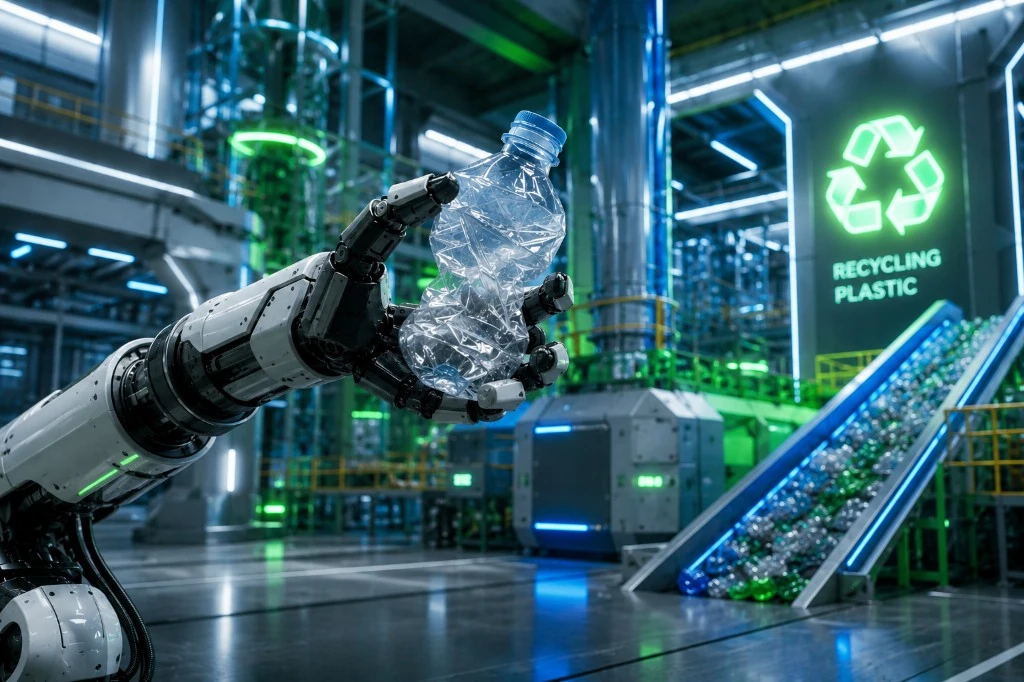
We treat human waste not as a problem but as underused resource potential. Landfill burial removes valuable materials from circulation for decades, polluting soil and groundwater — ecologically and economically irrational. We change that at a systems level.
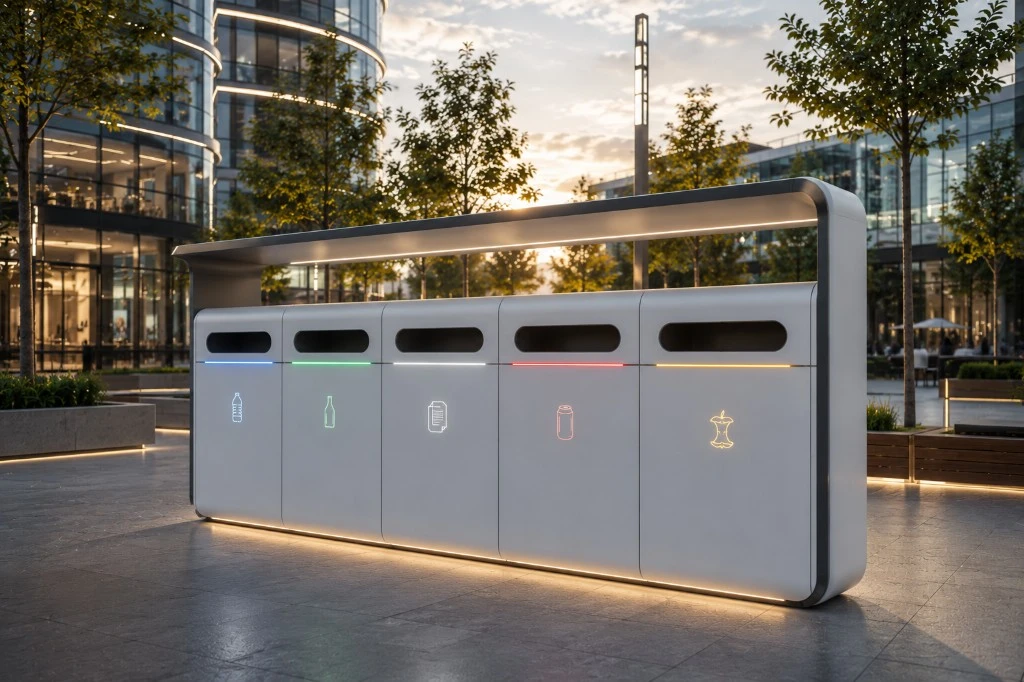
Why it is necessary
World Bank data puts global municipal solid waste above 2 billion tonnes per year; less than 20% is recycled. The rest is buried or burned without recovery. Plastic persists for centuries, glass indefinitely; organics in landfills emit methane — far more potent than CO₂. We are not activists — we are building a business that fixes this systematically.
What we recycle — and into what
We focus on four material streams with existing or in-development processing technology:
| Input material | Recycled product | Use in STAR |
|---|---|---|
| Glass cullet | Foam glass (board and granulated insulation) | Construction — insulation for smart homes and communities |
| Plastic (PET, HDPE, PP) | Molding granulate, 3D printing filament | Building tools, fixtures, smart furniture components |
| Paper waste | Cardboard, molded packaging | Agro product packaging, Star-Agro-Box transport materials |
| Organic waste | Biogas / heat and power | Power for the recycling plant; surplus to the grid |
These are not hypothetical chains. Each stream is engineered with specific equipment and end-product cost models.
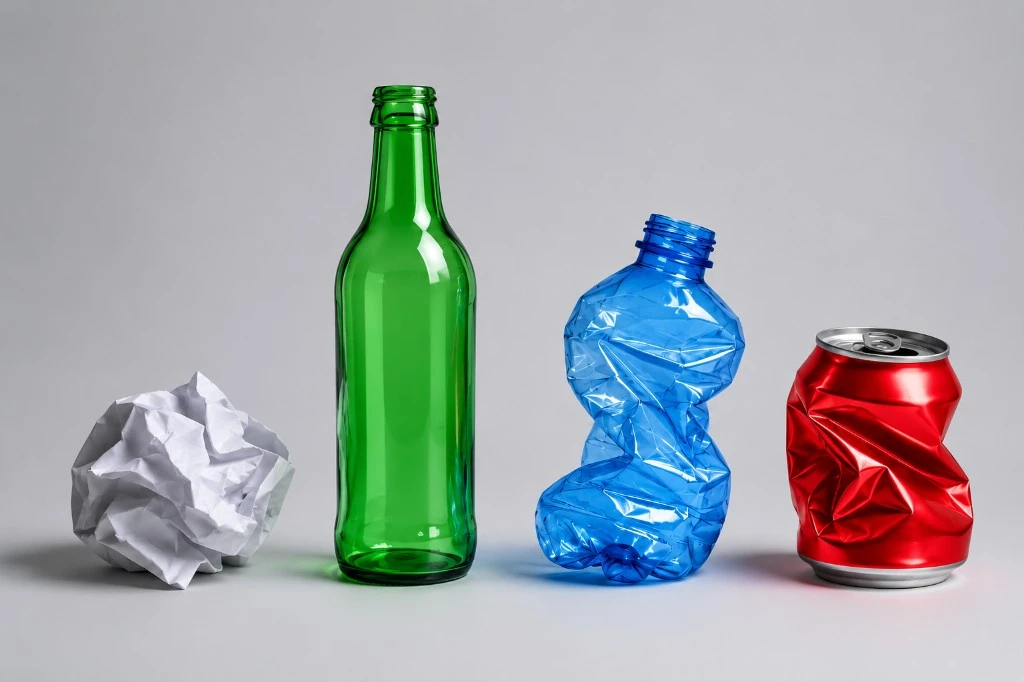
Innovation plant: flagship project
We are designing a full-cycle facility combining all four lines on one site — unlike typical sorting plants:
Deep processing
We do not merely sort and bale for resale. We produce finished goods that feed STAR production chains directly.
Energy autonomy
Organic fraction becomes biogas that powers the plant, cutting opex and carbon footprint.
Near-zero landfill
Everything entering the plant becomes product or energy; landfill residue approaches zero.
The project is in design and financial modeling.
Ocean cleanup: future track
Ocean plastic is an underestimated threat; by 2050 plastic mass in the ocean may exceed fish biomass. We are exploring programs to collect and recycle ocean plastic.
This requires major investment and technologies not yet available at industrial scale. We welcome partners who understand long-horizon R&D. The ocean has no nationality — it needs shared resources.
Economic logic
We build on economics, not rhetoric. Recycled products have market value: foam glass for construction, competitive secondary plastic, self-generated energy. When recycling beats landfilling, the market shifts on its own. Our job is to reach breakeven and scale.
STAR Recycling. There is no spare planet.
Projects in this direction
该栏目暂无内容。
该栏目暂无内容。